


Figma’s Strategic Shift: Moving from ECS to Kubernetes
The world of cloud computing moves at an extremely rapid level, where being ahead is the key to success. Figma, the popular design tool, is estimated to have made an important strategic decision about its transition from ECS to Kubernetes. This transition of Figma wasn’t just about updating their technology. Instead, it was a strategic move to harness the extensive advantages of the CNCF ecosystem, which also offers substantial cost-saving opportunities. Figma is trying to build a much stronger infrastructure that can help them provide better developers’ experience and further scalability.
This article will discuss the reasoning behind this move, the benefits accruing from it, and positions Figma for increased growth in the competitive design tooling market.
Why the Move?
Before moving, Figma ran containerized workloads using ECS. While ECS is a great bit of kit, it also lacks certain highlights. For example, it does lack support for StatefulSets and Helm charts. This prevented Figma from running certain open-source software such as Temporal.
Moreover, it took quite several engineering overheads to customize ECS for Figma’s needs. Besides, the company could hardly find any engineers who had experience with ECS. On the other hand, Kubernetes has a great community, and a wide variety of tools are supported by CNCF.
The Migration Process
Figma did a pretty planned migration to Kubernetes. Their strategy was to limit the scope of the migration as much as possible, minimizing the risks and delays that might come with such an action. They tried improving resource definitions, which came out more simplified, and reliability improved.
This meant that the migration was completed in less than 12 months with minimal impact on customers. In this case, Figma staffed a well-resourced team to drive the migration effort and engaged with the broader organization for their buy-in.
Benefits of Kubernetes
If you compare Kubernetes to ECS then Kubernetes has some advantages. First, it natively supports many CNCF tools. These include Keda for advanced autoscaling and Istio for service mesh capabilities. Kubernetes also makes it easier to adopt open-sourced software packaged as Helm charts.
Another major benefit is cost savings. Figma utilized Karpenter, an open-source CNCF project, to scale nodes dynamically based on demand. This approach brought huge savings to Figma.
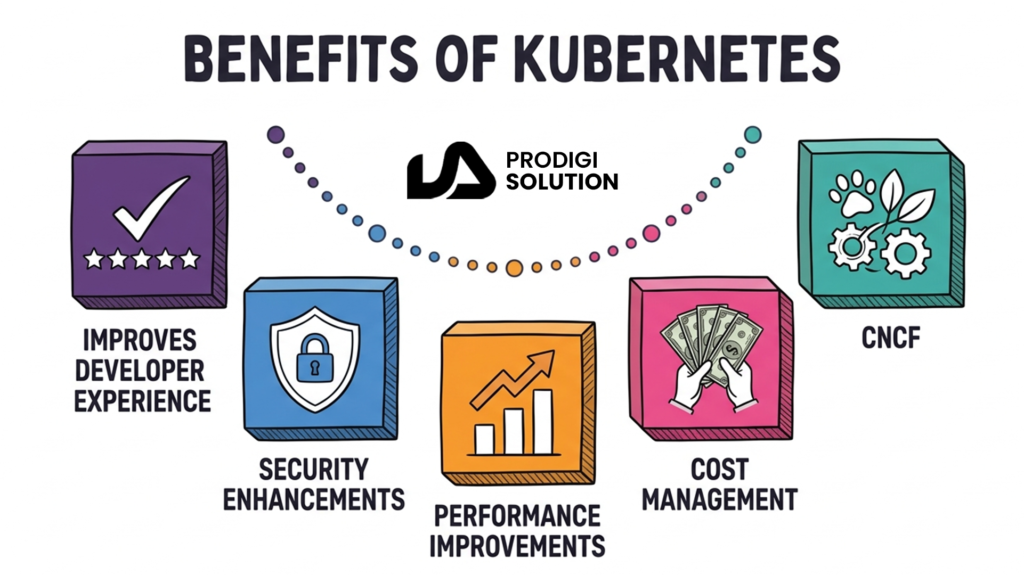
Improved Developer Experience
Improving the developer experience was one of the appealing reasons for this migration. Kubernetes provides a lot of simplification in terms of defining resources, thus allowing developers to handle their workloads. At the same time, the platform is much more reliable, which is very demanding for a high-growth company like Figma.
Security Enhancements
Security has always been and will continue to be one of the biggest concerns for any organization, and Figma is no different. Here Kubernetes, out of the box, provides several features that enhance overall security, which is part of the infrastructure. These include RBAC, network policies, and secrets management.
That’s why Figma decided to choose Kubernetes to better implement these security features. By doing so, this new situation improved not only the security posture of their applications but also kept them compliant with the ever-changing industry standards and regulations.
Performance Improvements
Performance is another category where Figma achieved significant improvements. Advanced scheduling and resource management were possible in Kubernetes, hence allowing Figma to work out the best performance of their applications. Being able to scale resources up or down dynamically depending on the demand means Figma can handle spikes in traffic without any performance compromise.
Besides this, Kubernetes supported horizontal pod autoscaling so that Figma could do a better distribution of its workload. This ensured that applications were constantly responsive and performant, whether during times of mere usage or even during peaks.
Cost Management Strategies
Cost is a factor in every infrastructure strategy, one way or another. Migrating to Kubernetes at Figma included several cost improvements. One cost improvement included the use of Karpenter, a CNCF project that optimizes resource utilization.
Karpenter dynamically rightsizes the number of nodes in the cluster based on the experienced workload. In this way, Figma only pays for the utilization metric and significantly reduces costs. Their other cost-saving strategy involved the use of spot instances for non-critical workloads; these are much cheaper than on-demand ones and hence attractive for any cost-conscious organization.
The Role of CNCF in Figma’s Success
That’s because the great role the CNCF ecosystem is playing was the reason for migration to be successful. CNCF hosts various projects that form a basis for modern cloud-native applications, including but not limited to Prometheus for monitoring, Fluentd for logging, and Envoy for service proxy. Figma used that stuff to drive performance and reliability in their infrastructure.
Community Support and Collaboration
One of the big advantages that Figma gains by transitioning from ECS into Kubernetes is community support. Kubernetes hosts the largest, most active open-source community in the world, continuously working on and enhancing its features. Community-driven by nature, it stays current with new technological advances.
Figma enjoyed the support of the community in this migration, whereby other organizations that had undergone such migration supported this collaboration, sharing insights and best practices that helped them overcome common pitfalls.
The Road Ahead
And this isn’t where the Figma and Kubernetes journey stops. It will continue to delve into more and more such new projects the CNCF and their features will come up with to enhance the infrastructure. The realms they are thinking about include serverless computing, edge computing, and AI/ML integration.
Figma is positioning itself on the leading edge of technology in a market where it hopes to hold an ever-advantaged position. Innovation and a commitment to continuous improvement infuse the dedication to always deliver outsized value to their users.
Challenges Faced
While there were several advantages associated with Kubernetes, the process was not a piece of cake either. One problem was the complexity of Kubernetes in itself. The team had to invest time in learning and adapting to the new platform.
Yet another challenge was how not to disrupt the service currently running. Figma addressed that by splitting it into three Kubernetes clusters. The approach will help them avoid issues related to bugs or operator errors.
Future Plans
Among all those, the migration of Figma from ECS to Kubernetes was just the first step, and more CNCF tools and features are on the way to use shortly, according to the team. Meanwhile, the multi-cloud or hybrid cloud strategy is also under consideration.
Conclusion
The migration from ECS to Kubernetes in Figma is driven as a strategic move for benefits accruing from the CNCF ecosystem, with cost reduction being one of the major points. The benefits from the transition have already been massive in the form of cost cuts, improvement in developer experience, and resiliency increase. Of course, like all migrations, this one came with its own set of challenges, but Figma planned and executed it in so much detail that the customer had minimal impact.
This makes it easier for Figma to bring in newer cloud-native technologies and stay ahead in the competition for design tools. The company will keep creating more innovative solutions and enhancements as it continues to leverage the CNCF ecosystem.