

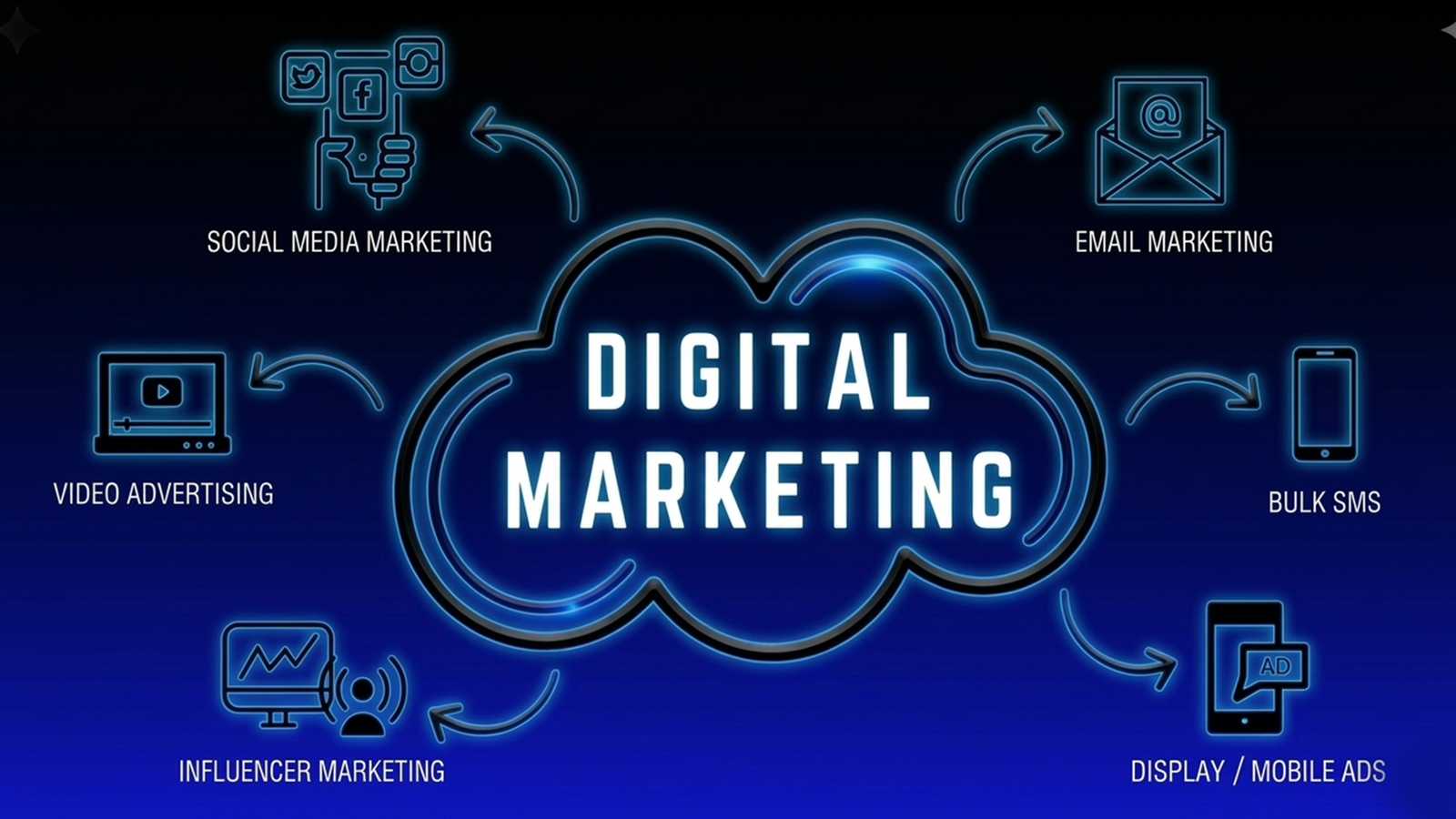
In today’s fast-paced digital world, businesses can no longer rely only on traditional marketing methods to grow. Customers now search online, compare brands on social media, and make buying decisions through digital platforms. This is where digital marketing plays a crucial role. Digital marketing helps businesses reach the right audience, build brand awareness, generate leads, and increase sales using online channels.
In this guide, we will explain what digital marketing is, why it is important, its main types, and how businesses can use it effectively for long-term growth.
What Is Digital Marketing?
Digital marketing refers to the use of online platforms, digital channels, and internet-based technologies to promote products or services. It includes all marketing efforts that use search engines, websites, social media, email, content, and paid advertising to connect with potential customers.
Unlike traditional marketing, digital marketing allows businesses to target specific audiences, track performance in real time, and adjust strategies based on data. Whether you are a small business or a large company, digital marketing helps you compete in the online marketplace and reach customers where they spend most of their time.
Why Digital Marketing Is Important for Businesses
Digital marketing has become essential for businesses of all sizes. Here are some key reasons why it matters:
Global Reach and Targeted Audience
Digital marketing allows businesses to reach customers worldwide without physical boundaries. At the same time, it enables precise targeting based on location, age, interests, and behavior, ensuring your message reaches the right audience.
Cost-Effective Marketing
Compared to traditional advertising, digital marketing is more affordable and offers better returns. Small businesses can run effective campaigns with limited budgets while still achieving measurable results.
Measurable and Trackable Results
One of the biggest advantages of digital marketing is data tracking. Businesses can measure website traffic, conversions, engagement, and return on investment (ROI), helping them make smarter marketing decisions.
Brand Awareness and Credibility
A strong online presence builds trust and credibility. Consistent digital marketing efforts help businesses establish authority, improve visibility, and create lasting relationships with customers.
Types of Digital Marketing
Digital marketing includes several strategies, each serving a different purpose. Below are the most important types:
Search Engine Optimization (SEO)
SEO focuses on improving a website’s visibility on search engines like Google. By optimizing content, keywords, and technical elements, businesses can rank higher in search results and attract organic traffic. SEO is a long-term strategy that delivers sustainable growth and quality leads.
Social Media Marketing (SMM)
Social media marketing uses platforms such as Facebook, Instagram, LinkedIn, and X to promote brands and engage with audiences. It helps businesses build brand awareness, communicate directly with customers, and create a loyal community around their brand.
Pay-Per-Click Advertising (PPC)
PPC advertising allows businesses to display ads on search engines and social media platforms and pay only when users click on them. Google Ads and social media ads provide instant traffic, leads, and sales when managed correctly.
Content Marketing
Content marketing focuses on creating valuable and informative content such as blogs, videos, infographics, and guides. High-quality content educates audiences, builds trust, and supports SEO efforts, making it a powerful long-term marketing strategy.
Email Marketing
Email marketing helps businesses stay connected with customers through personalized messages, newsletters, and promotions. It is highly effective for lead nurturing, customer retention, and increasing repeat sales.
How to Create an Effective Digital Marketing Strategy
A successful digital marketing strategy starts with clear planning and execution. Here are the key steps:
Define Business Goals
Identify what you want to achieve, such as increasing website traffic, generating leads, or boosting sales.
Understand Your Target Audience
Research your audience’s needs, preferences, and online behavior to create relevant and engaging campaigns.
Choose the Right Marketing Channels
Select digital channels that align with your goals, whether it’s SEO, social media, paid ads, or content marketing.
Plan Budget and Resources
Allocate your budget wisely across different platforms to maximize ROI without overspending.
Track and Optimize Performance
Use analytics tools to monitor performance and continuously improve campaigns based on data insights.
Digital Marketing Tips for Small Businesses
Small businesses can achieve great results with the right digital marketing approach:
- Focus on local SEO to attract nearby customers
- Maintain consistency on social media platforms
- Start paid advertising with a small, controlled budget
- Optimize your website for speed, usability, and conversions
These steps help small businesses grow online without large investments.
Common Digital Marketing Mistakes to Avoid
Many businesses fail to see results due to common mistakes, including:
- Running ads without a clear strategy
- Ignoring SEO and relying only on paid traffic
- Poor website design and user experience
- Not analyzing data or campaign performance
Avoiding these mistakes can significantly improve your digital marketing success.
Digital Marketing Trends to Watch in 2025
The digital marketing landscape continues to evolve. Key trends to watch include:
- AI-powered marketing and automation
- Increased focus on video marketing
- Voice search optimization
- Influencer marketing and brand collaborations
Staying updated with these trends helps businesses stay competitive and relevant.
How Digital Marketing Helps Business Growth
Digital marketing plays a direct role in business growth by:
- Generating high-quality leads
- Improving conversion rates
- Building customer loyalty and trust
- Delivering long-term return on investment
With the right strategy, digital marketing becomes a powerful growth engine for any business.
Conclusion
Digital marketing is no longer optional, it is a necessity for modern businesses. From SEO and social media marketing to paid ads and content creation, digital marketing provides measurable, cost-effective solutions for reaching customers and driving growth. Businesses that invest in professional digital marketing strategies gain a competitive edge, build stronger brands, and achieve sustainable success.
Looking to grow your business online? Partner with a professional digital marketing team to achieve real, measurable results. Contact us today to get started.